

0 引言
1 月基紫外-光学-红外天文观测对月面选址的需求
2 月基天文观测站点可见天区分析方法和流程
2.1 月基天文观测站点可见天区分析方法
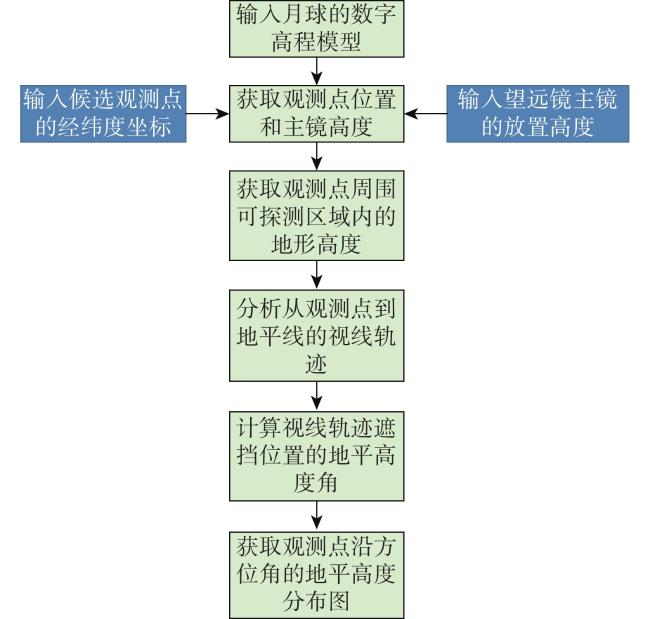
2.2 月基天文观测站点可见天区分析计算流程
2.3 月基天文观测站点可见天区分析计算结果
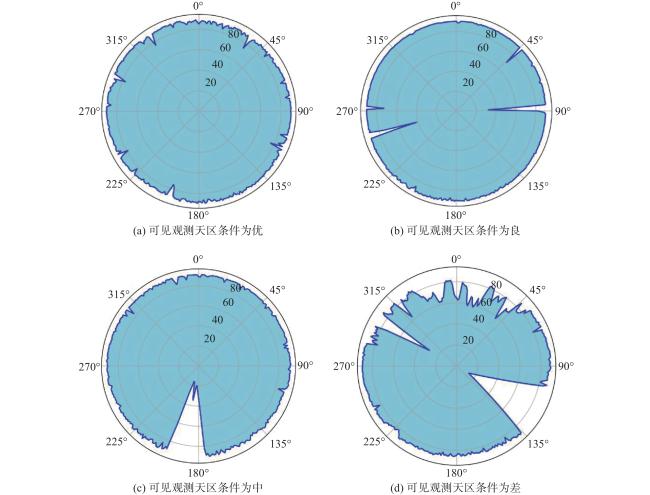
图 2 月面南极地区四个地点的可见天区分布Fig.2 The visible sky distribution of four locations near the South Pole of the Moon |
表 1 月面天文观测站点可观测天区分布等级判定标准Table 1 The criteria for determining the distribution grades of observable sky areas at lunar astronomical observation sites |
| 天文观测站点 可观测天区分布等级 | 判定标准 |
| 优 | 该点满足地平高度15°以上几乎无遮挡,或地平高度15°以上在方位角方向被遮挡的天区张角不大于5° |
| 良 | 该点满足地平高度15°以上在方位角方向被遮挡的天区张角大于5°且不大于15° |
| 中 | 该点满足地平高度15°以上在方位角方向被遮挡的天区张角大于15°且不大于45° |
| 差 | 该点满足地平高度15°以上在方位角方向被遮挡的天区张角大于45° |
3 月基天文观测站点天体观测样本可见性分析方法
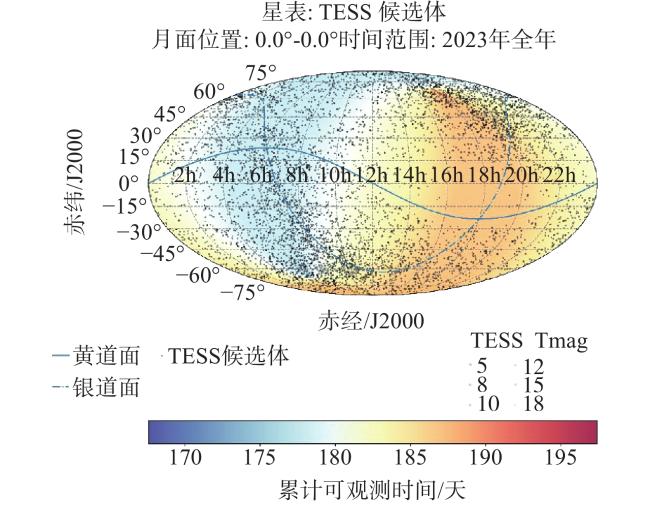
图 5 月面低纬度(0°E,0°S)观测站点一年观测时间内TESS系外行星候选体样本可观测天数图Fig.5 The observable duration of TESS exoplanet candidates at low latitudes (0°E, 0°S) on the Moon's surface over a one-year observation period. The color bar, progressing from left to right, indicates the range of observable days from 156 to 208 |
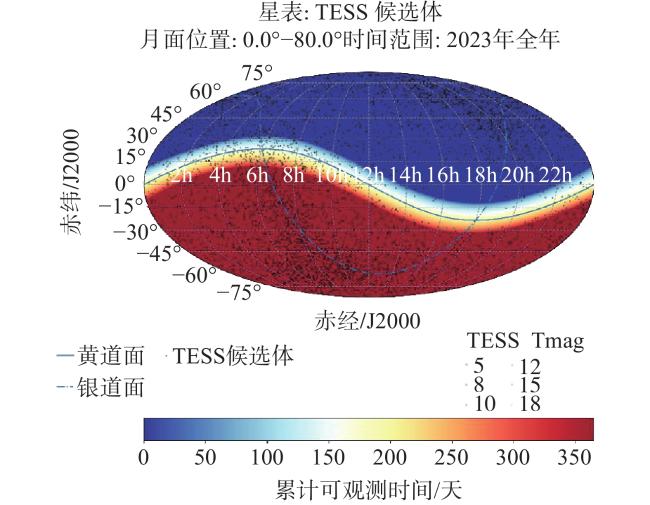
图 7 月面高纬度(0°E,80°S)观测站点一年观测时间内TESS系外行星候选体样本可观测天数图Fig.7 This graphic displays the duration of TESS exoplanet candidates that can be observed at high latitudes (0°E, 80°S) on the Moon's surface throughout a one-year observation period |
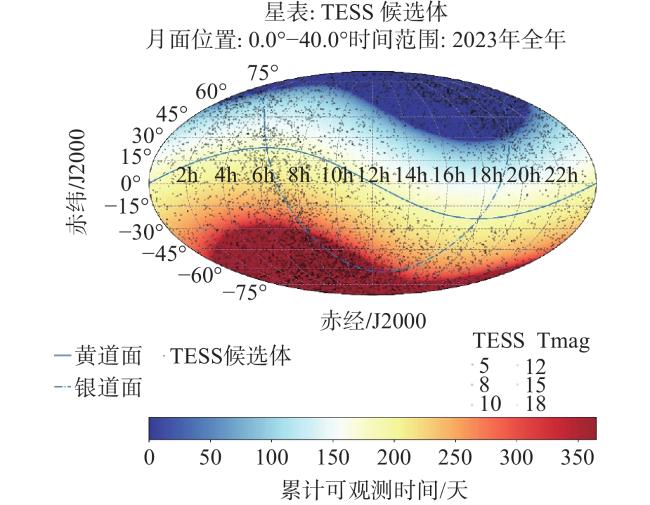
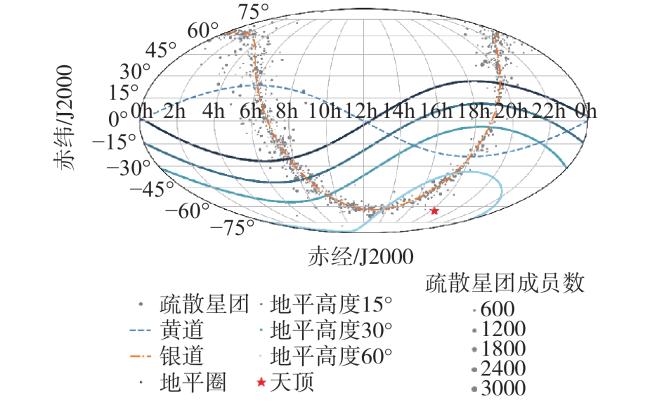


图 8 疏散星团在月面南半球高纬度地区某示例观测站点(42°E,89°S)可观测情况Fig.8 The observable conditions of an open star cluster sample at a randomly chosen high-latitude observation site (42°E, 89°S) in the southern Moon's hemisphere, as seen on July 2, 2023, at 0:00 UTC, are illustrated. The black solid line denotes the horizon, while the colored lines (red, yellow, and blue) represent lunar elevations of 15°, 30°, and 60°, respectively. The red pentagram indicates the zenith at the location |