
0 引 言
航空航天结构材料在服役过程中,会暴露于高温、强载荷、热-机械循环、化学侵蚀与粒子冲击等复杂共存的极端工况之中。同时,材料的服役时间跨度极大,从瞬时冲击到千小时乃至更长时间服役都有涉及[1]。基于这些严苛服役条件下的材料设计,必须在比强度、比刚度等静态力学指标,以及高温蠕变抗力、疲劳耐久性及断裂韧性等长期服役性能之间实现协同优化,同时还要兼顾材料表面与微观组织在高温或侵蚀性介质下的化学与结构稳定性[1-3]。宏观性能退化主要由微观和介观过程共同驱动,这些过程包括析出相形核与粗化、位错-相界作用以及晶界偏析等。这些过程在温度、应力和时间尺度上相互耦合,显著提高了寿命与可靠性指标预测的不确定性[4-6]。以镍基高温合金为例,γ′相行为对高温蠕变与断裂有决定性影响。相关的显微组织表征、力学性能测试与数值模拟研究,已系统地揭示了该类多尺度耦合机制,同时也暴露出单一尺度理论或经验规则在长时尺度寿命预测方面的不足[7]。
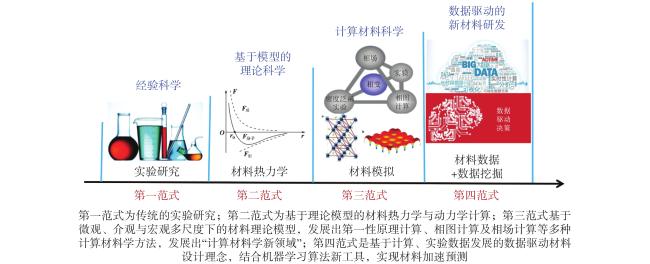
合金成分空间由传统二元/三元体系扩展到多主元乃至高熵合金,设计变量的维数显著上升,导致可行配方数目呈指数级增长。同时,关键性能指标的获取通常需要漫长且高成本的试验,这使得传统的经验或“试错”式设计方法难以为继[3-5]。在材料设计的演进过程中,可将现有方法归纳为四个互补的范式(见图1 ):以经验和实验为主的第一范式、以物理理论和机理分析为核心的第二范式、以第一性原理与高通量计算为代表的第三范式,以及以统计学习与机器学习为代表的数据驱动第四范式。计算材料学(即第三范式)通过第一性原理、热力学/相场模拟以及高通量计算等技术,提供了必要的物理先验与候选筛选能力,并借助结构化数据支持在大规模候选中实现快速排序与优先级分配[6]。然而,计算范式在应对工程化转化时显示出若干内在局限:不同尺度与方法间的数据异构性使跨尺度耦合困难,原子尺度的模拟结果难以直接映射到材料的工程失效寿命与失效指标,从而增加了外推不确定性[5];对复杂多相、多成分体系的描述仍依赖近似假设,且在冶金工艺与环境可行性评估方面存在盲区,致使计算所得候选常与工程可制备性不匹配[7]。因此,面向工程化的可行路径应当将数据驱动方法与物理模拟有机结合:一方面,以物理模型和相图/动力学约束指导特征构造与模型先验,从而提升数据驱动模型的物理一致性和外推可信度;另一方面,以多模态、多保真度的数据融合、基于不确定性的代理建模与自适应试验设计实现计算预测、机器学习与实验验证的闭环迭代。通过将经验观察、机理解析、计算预测与数据驱动模型在同一设计框架下进行整合,在计算框架下协调运作,既能兼顾设计空间的覆盖度,又能确保预测的可信度,从而推动材料设计从候选筛选逐步迈向可证伪的机理发现与工程化应用[8-9]。
机器学习作为一种以数据为驱动的方法学工具,已在材料科学尤其是合金设计领域显示出显著的效用。通过计算、实验和文献搜集等方法建立数据库,能够从高维、非线性且异构的数据中提取描述成分-工艺-组织-性能关系的规律,在庞大的候选成分空间中实现材料性能快速预测,极大地提高了材料的设计效率[4, 10]。将机器学习与材料先验知识相结合,可通过引入热力学、相平衡、微观组织演化等约束条件,指导特征选择与构造,从而显著提升模型的泛化能力与物理可解释性,并增强对未观测体系的预测可信度[11]。随着神经网络、图表示学习及晶体图卷积神经网络(Convolutional Neural Network,CNN)的发展,结构化模型能够直接从原子或晶格连接关系中学习高阶结构信息,减少对人工特征工程的依赖,并在多项性质预测任务中取得高精度[12]。在航空航天领域,研究者已将机器学习与第一性原理计算、CALPHAD(CALculation of PHAse Diagrams)方法以及实验数据结合,成功预测了多种候选高温合金强化相稳定性、力学性能、组织形貌等特征。尽管机器学习在筛选效率和模式识别能力上显示出显著优势,但其在工程化应用中仍受限于数据覆盖度与质量、跨尺度物理一致性、模型可解释性以及外推不确定性等问题[8]。为了解决上述问题,当前研究趋势集中于物理先验知识嵌入、多模态与高保真数据融合策略、小样本迁移学习以及不确定性驱动的自适应试验设计闭环,从而在有限高可信度实验资源下实现候选材料高效筛选,同时提出可被实验验证的机理性假设,使机器学习逐步成为连接计算发现与工程验证的可靠桥梁。
综上所述,航空航天用材料的设计既面临成分空间爆炸式增长与工程关键性能试验稀缺的现实约束,也受到多尺度、多物理场耦合导致的机理复杂性的根本性挑战。计算材料学通过第一性原理、相场与热力学建模为候选筛选与机理假设提供了必要的物理先验,但其在跨尺度映射、长期寿命外推与工艺可制备性评估方面仍存在显著局限。机器学习在高维非线性映射与性能准确预测上展现出高效的优势,然而,单纯的数据驱动受限于数据覆盖度、物理机制结合程度与外推不确定性。结合多模态/多保真数据融合、物理先验嵌入、不确定性量化与信息增益驱动的自适应试验设计,构建从计算预测到材料内在机理再到工艺设计的闭环工作流,同时需在数据标准与跨学科协作机制上建立制度保障,以实现对高温合金的“材料-成分-工艺-性能”一体化设计。
1 人工智能设计航空航天材料方法综述
人工智能(Artificial Intelligence,AI)是一个以“感知-认知-决策”为核心目标的综合性学科与工程技术体系,其内涵广泛,涵盖知识表示与推理、搜索与优化、机器学习、计算机视觉、自然语言处理以及智能控制与机器人等多个分支,与传统依赖显式机理模型或经验规则的计算材料学相比,人工智能更强调通过数据驱动的表征学习与决策算法,在复杂高维空间中自动抽取特征、识别模式并完成预测与优化,为处理强耦合、多目标和高风险的材料设计问题提供了新的方法学支撑[13]。机器学习可被视为一套以数据驱动为核心,通过参数化映射学习输入表示到目标属性之间复杂关系的方法学体系。机器学习强调在“成分-工艺-组织-性能”多变量空间中,通过统计学习自动建立输入与输出之间的非线性映射关系。在方法层面,它既包括基于特征工程的经典监督/无监督学习,也包括以深度神经网络为代表的端到端表征学习,以及结合先验机理约束的物理信息/科学机器学习等新范式与仅依赖经验或单一机理模型的传统设计路径相比,机器学习一方面可以在有限样本条件下显著提升预测精度与样本效率,另一方面能够对复杂变量间的高阶耦合关系进行定量描述,从而为识别控制性因素、缩小候选合金空间和构建高效代理模型提供可能[14-16]。
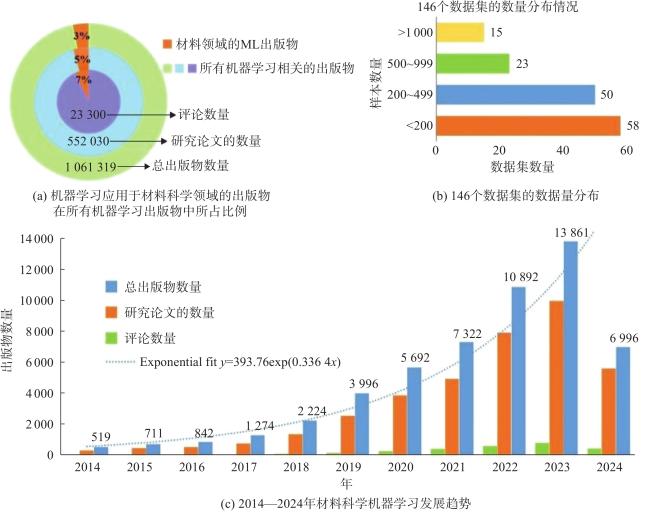
研究者基于Web of Science对2014—2024年“机器学习”在材料相关主题(机器学习和材料科学或materials design或materials discovery)中的文献进行了计量分析,如图2 所示。总体上,作为通用研究主题,机器学习的相关论文数量持续上升,不过其在材料科学领域的专门应用起步相对较晚;2016年后,随着一系列高影响力工作的推动,材料领域内的机器学习研究进入加速期,年度发表量呈现出近乎指数级的增长,这反映出方法学移植、表征体系构建以及问题导向应用的同步扩展(见图2 (a)和图2 (b))。对已公开数据集的规模统计显示,多数材料学任务仍处于“小样本”范围(见图2 (c)),这直接制约了监督式深度模型的外推能力,同时也为后续预训练与迁移学习范式的引入提供了动机和场景支撑。
1.1 经典机器学习与特征工程方法学与应用
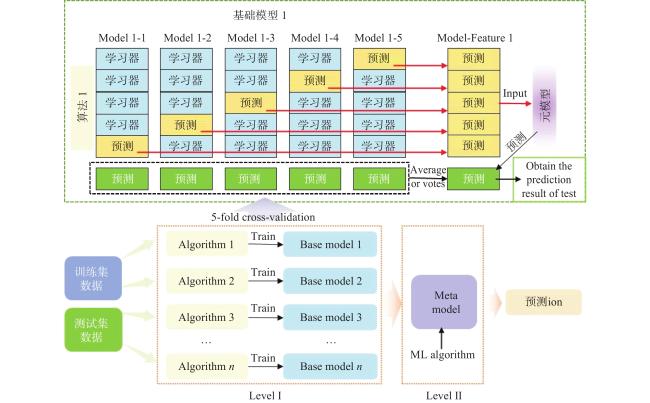
当经典机器学习方法应用于航空航天用材料研究时,特征工程是构建可解释预测模型的有效路径。针对航空航天用材料设计问题,研究者通常以元素本征属性、基元统计量、工艺参数作为输入描述符,来预测相稳定性、析出相体积分数、强度或蠕变寿命等工程指标,图3 给出了经典机器学习二级堆叠模型的架构。相关工作表明:基于此类人工构造描述符的梯度提升树或随机森林模型,能够在成分-性能映射的若干任务中达到较高的预测精度,并且能通过特征重要性分析探索影响材料关键性能的元素或工艺参数[4]。以经典的简单叠加法为例,首先选择几种机器学习算法,每种算法从训练数据集中生成一个基本模型。在模型训练过程中,通常使用k-fold交叉验证(k-fold CV)来避免过拟合。接着,将这些基本模型的输出(预测结果)作为特征(元特征)来训练元模型。理论上,经过适当算法训练的元模型可以比任何基础模型都更加准确。
基于特征工程的经典模型在设计新材料方面能够大幅提高效率,然而,这类机器学习算法存在一定的局限性。人工构造的描述符难以穷举系统中所有可能的高阶耦合关系与非线性交互,尤其在多主元、高熵或含复杂相变动力学的体系中,手工特征往往无法完全表征关键微观机制,这会在一定程度上影响机器学习预测结果的精度;传统特征工程对显微组织图像、谱图、微区成分分布图等非结构化数据处理能力有限,需要借助专门的图像处理与谱学分析流程才能提取有用数值特征;在多尺度耦合与长期寿命预测问题上,单一特征集结合静态学习器往往难以提供可靠的外推不确定性评估[14]。
1.2 卷积神经网络与显微组织图像分析方法学与应用
卷积神经网络是深度学习领域中专门针对格状数据(如图像)设计的表征学习架构。其核心思想在于通过局部感受野、权值共享与层次化特征抽取的机制,自动学习从低阶边缘/纹理到高阶形态/拓扑的多尺度判别表征[18-19]。卷积神经网络的基本构件包括用于局部特征提取的卷积层、用于下采样和平移不变性的池化层、非线性激活函数、归一/正则化模块,以及用于像素级任务的上采样/跳跃连接模块[18-21]。网络深度、卷积核尺寸与层次布局共同决定了模型的感受野与表征层级。残差连接、批量归一化等结构性改进已被验证可缓解深层网络训练中的退化问题并显著提升收敛性与性能[22]。在计算任务部署过程中,若干实践策略是必要的。旋转、翻转、噪声注入等数据增强技术用于扩充小样本图像集;迁移学习的预训练及微调则能够有效降低标注需求;多任务学习与自监督预训练则有助于在无标注或少标注情形下学习稳健表征;而模型集成、蒙特卡罗模拟等不确定性估计方法对航空航天材料外推的可靠性尤为重要[23-24]。此外,可解释卷积模型为显微图像中形貌-性能关联的机理分析提供了强大的技术支持[25]。
将卷积神经网络应用到航空航天用材料中的显微组织分析时,CNN能直接从原始显微图像中自动抽取判别性特征,在微观相识别、相区域分割、相体积分数/尺寸分布统计、晶粒边界检测、析出相计数与形貌表征,以及失效形貌自动分类等任务中得到了广泛应用(见图4 )[26-29]。利用语义分割网络对镍基高温合金显微组织中γ'析出相进行像素级分割,测定γ'析出相的体积分数,从而实现对强化相演化的自动化表征并为蠕变/断裂寿命预测模型提供输入[30];基于深度分类器对铝合金与钛合金的热处理后显微组织进行微观相识别,进而与工程力学试验数据耦合以建立显微结构-性能的预测模型[32-33];CNN还在原位扫描电子显微镜(Scanning Electron Microscope, SEM)高温原位拉伸试验中实时识别裂纹萌生与扩展、滑移带运动等动力学特征,为寿命预测与失效预警提供新的自动化手段[34]。基于CNN图像的自动表征不仅提高了表征效率,而且通过精细而稳定的微观量化,有助于将“组织”变量以结构化形式输入到后续的数据驱动或物理-数据混合模型中,促进从显微尺度到器件尺度的跨尺度映射。
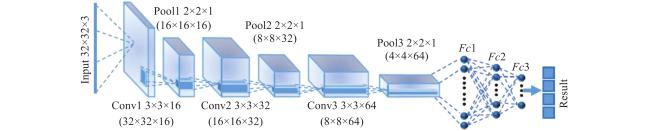
综上所述,尽管CNN在显微组织的形貌量化与自动化表征方面取得了显著进展,但在跨设备/跨尺度的泛化、像素级标注稀缺、原子级化学信息的表征以及长时尺度多物理耦合的寿命外推等方面,仍存在结构性不足。单一图像表征难以覆盖原子尺度化学与长程场效应,难以满足工程级外推与可靠性评估的需求。为弥补对原子尺度拓扑与化学环境的直接建模能力,有必要将基于图结构的表示学习方法(即图神经网络)融入多尺度建模框架,以实现显微组织表征与成分/晶体级预测的有效耦合。
1.3 图神经网络原子晶体结构表示与性质预测
图神经网络是近年来人工智能领域中最为活跃和前沿的深度学习方法之一。其核心思想在于利用图结构作为输入数据的表示形式,从而对复杂系统中节点及其关系进行有效建模。与主要处理欧几里得空间中的规则网格数据的卷积神经网络不同,GNN天然适用于描述分子、晶胞结构等非欧几里得空间的数据结构。GNN通过定义在图上的传播与聚合操作,将节点的特征信息与邻居节点的特征进行迭代更新,从而逐步学习到全局层面。这一过程可形式化为消息传递机制,即在每一层中,节点从邻居接收信息并结合自身状态进行更新。经过多层迭代后,网络能够捕捉到复杂的局部结构与全局拓扑特征(见图5 )[35-37]。GNN具有自动化特征提取能力,能够端到端地学习原子、分子甚至晶体结构等多尺度信息,为材料科学问题的建模提供了更高的灵活性与精度。值得注意的是,GNN的优势不仅在于结构化信息的表达能力,还在于其具备较好的可扩展性和泛化性。在晶体结构预测中,GNN能够直接在原子邻接图上学习原子间的相互作用,从而捕捉复杂的键合特征与多体效应。GNN的提出不仅丰富了深度学习方法体系,也为跨学科研究提供了新的范式,尤其是在需要同时考虑局部原子结构与整体晶体对称性的材料建模任务中展现出独特优势[38]。
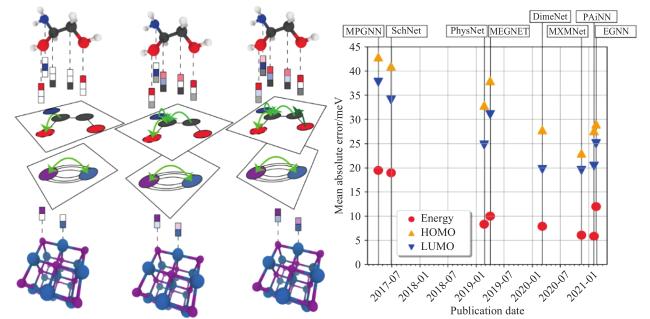
航空航天材料服役环境极为苛刻,普遍具有多元素、复杂相结构等特征。图神经网络的引入,为加速新材料的设计提供了新的思路。研究者利用晶体图卷积网络对Ni基和Co基高温合金的性能进行了预测,在无须开展大量实验的情况下,成功筛选了具备优异蠕变寿命与热稳定性的候选材料[40-41]。此外,在航空航天服役环境中,材料往往经历复杂的温度梯度、应力场和辐照效应,传统模拟难以准确覆盖这些多物理场耦合行为。基于GNN算法,能够融合多尺度、多物理场等情形,建立跨尺度的预测模型。未来,GNN在航空航天材料中的应用有望进一步拓展,不仅限于单一性能预测,还可实现综合性能优化与服役寿命评估,从而推动材料设计范式从“经验驱动”向“智能驱动”转变,为新一代航空航天器的极端特殊环境服役提供关键支撑[42]。
总体而言,GNN以原子-邻域-晶胞的图表示方式,实现了结构-性质的端到端映射,在多组元、多相体系的高通量筛选中具备显著优势。但在工程化应用中,高保真标注稀缺、数据域异质与多物理场/时间演化的跨尺度耦合,使得在小样本条件下进行监督训练时容易出现过拟合现象,且外推结果不稳,亦难以给出可信的不确定性度量。因此,仅凭单一监督式图学习难以满足工程对稳健性与可解释性的要求;需要引入可迁移的通用表征(自监督/无监督预训练与迁移学习)、多保真数据融合与不确定性量化,以及信息增益驱动的主动采样,以便在有限高可信度数据下构建可工程采纳的混合框架——这也为后续基于自注意力/Transformer的预训练范式奠定了方法学基础。
1.4 Transformer与预训练小样本表征迁移与多模态融合
自注意力通过对输入任意两元素间关系的可学习加权汇聚,使模型在单层即可显式编码长程依赖于全局上下文。以自注意力为核心的Transformer,结合多头注意力、残差与归一化以及位置/结构编码,在确保并行高效训练的同时,实现了对可变长度与异构输入的统一表征[43-45]。当该范式用于结构化/图数据时,需要在注意力权重中显式地注入拓扑与相对位置、最短路径、键-角-距等几何先验,以满足置换、平移与旋转对称性,并弥补纯全局注意力在几何感知方面的不足。该思路已在图注意力网络与Graphormer等模型中得到系统化实现[46-48]。预训练-微调能够有效解决“小样本”问题,具体流程是依托掩码重建、对比学习与结构/反应预测等自监督/无监督任务,先在大规模低保真或跨域数据上先学习与键合、对称性、相稳定等相关的通用表征,再用少量高保真标签微调,这样可以显著降低过拟合、提升外推稳健性,并实现可校准的不确定性估计[49-50]。与此同时,生成式扩散模型以“加噪-去噪”的反演过程近似数据分布,直接在结构空间合成物理可行候选,2025年Nature报道的MatterGen通过扩散生成逐步细化原子类型、坐标与周期性晶格,能够产出稳定且多样的无机材料结构,为材料设计提供新的先验与合成样本来源,从分布层面缓解训练数据稀缺的问题(图6 )。在材料与化学任务中,基于成分的注意力模型(如CrabNet)、分子/反应Transformer(如Molecular Transformer、GROVER)以及图Transformer的自监督预训练与扩散式生成,正在形成“判别式表征+生成式建模”的协同体系,并在Matbench等基准上展示出跨任务、跨分布的迁移能力与鲁棒表现[51-54]。
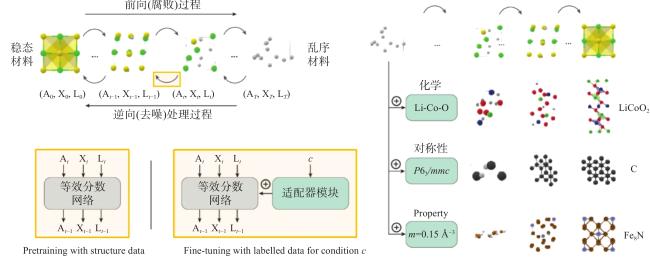
在航空航天用高温合金材料领域,机器学习面临小样本、跨尺度与多模态问题,长期蠕变/疲劳、极端环境性能等高保真标签稀缺且分布异质,导致传统监督模型外推可靠性受限。基于Transformer的预训练-微调路径可先在低保真计算/结构库与材料文献语料上学习与键合、对称性、相稳定相关的通用表征,随后以少量高可信度性能数据进行微调,在小样本条件下显著缓解过拟合并提升外推稳健性[55-57]。同时,注意力作为通用对齐算子,便于将晶体/分子图表示、显微组织图像与工艺文本/时序数据映射至统一表征空间,实现多模态/多保真融合与互信息加权整合,从而更充分地刻画工艺-组织-性能的跨尺度关联,并开展可校准的不确定性评估[57-58]。生成式扩散模型可在物理约束下生成稳定、多样的材料结构,为高温合金相关相/界面化合物、涂层/热障陶瓷等提供可筛选的结构候选与数据增广来源。这类合成样本既可服务于预训练,也可在主动学习回路中作为高价值样本提案,并与贝叶斯优化联合使用,以最大化单位实验成本的信息增益,从而在有限预算下加速候选筛选与寿命评估[59-61]。据此,可构建以Transformer为核心,叠加预训练/迁移、扩散式生成与多模态/多保真融合的复合方法链,用于在小样本条件下提升表示质量、外推稳健性与决策效率。该方法正逐步形成面向航空航天关键材料智能设计的可复用方法学与技术框架。
1.5 物理-数据融合与不确定性量化
面向航空航天材料典型的“小样本-强耦合-高风险”设计场景,单一的经验回归或端到端数据驱动模型难以实现材料的快速精确设计。混合物理-数据驱动范式通过在模型结构与学习目标中显式嵌入热力学/动力学约束、对称性不变量与软/硬约束,并引入可微物理模块或可学习算子与数据同化协同求解,在有限高可信度样本条件下,显著提升了样本效率与外推稳定性[62-64]。鉴于高保真数据难以获取且覆盖面有限,多保真层级建模以低成本模拟或经验模型构建“广覆盖”先验,再利用少量高保真实验/高精度计算进行层级校正和方差收敛。多保真贝叶斯优化通过代价感知采样与保真度自适应,在预算约束下加速收敛至满足可制备性与服役约束的帕累托前沿[65-68]。上述“约束式学习-多保真融合”的组合,使“成分-工艺-组织-性能”映射在物理可行域内受控学习与搜索,并为后续按材料体系进行的候选筛选与工艺窗口反演提供可检验的方法学基线。
当前,对通过将机器学习算法模型与材料先验知识融合来设计航空航天材料的研究较少,即物理-数据融合深度不足。为突破上述困境,有以下几条可行路径:
(3)在生成式先验中显式融入对称性、守恒与热力学边界,形成“生成-约束-筛选”的物理可行候选库,并与主动学习/贝叶斯优化联动开展跨尺度试验规划与多目标(强度-韧性-蠕变-抗氧化)协同优化[74]。
通过上述要素的系统整合,有望在有限高可信度数据条件下实现对关键失效机理的可证伪推断与对复杂工况的性能精准外推预测,进而形成可迁移、可认证、可落地的航空航天材料智能设计方法体系。
1.6 小 结
围绕“表征—模型—约束—决策”这一逻辑主线,人工智能用于航空航天材料设计的技术谱系可归纳为一条由可解释基线出发,向多粒度深度表征推进,再向小样本迁移与生成式增广递进的路径。基于特征工程的经典机器学习依托具有物理含义的描述符,在数据规模受限与噪声水平较高的条件下提供了稳健起始点,但对高阶耦合与非结构化信息的覆盖存在不足。卷积神经网络通过层次化特征抽取实现了显微组织的自动定量与形貌-性能关联建模,显著提升了“组织”变量的结构化表达能力;然而,跨设备/跨批次的域偏移与像素级标注的稀缺,限制了其在工程级的外推应用。图神经网络将原子-邻域-晶胞拓扑直接纳入端到端学习,在多组元、多相体系的性质预测与高通量筛选中展现出天然优势,但在高保真标签稀缺与多物理场、时间演化耦合的情境下,外推稳定性与不确定性度量仍需配套机制支撑。自注意力与Transformer借助全局依赖建模与预训练-微调范式,增强了表征的可迁移性与小样本下的泛化能力,扩散式生成为结构空间提供了物理可行的先验与数据增广渠道,但预训练偏置、物理约束显式化与算力/数据成本的平衡尚待严谨评估。
物理-数据融合与不确定性量化为从“计算发现”迈向“工程采纳”提供了支撑,通过在模型结构与目标函数中嵌入热力学/动力学约束、守恒律与对称性不变量,并采用多保真层级代理联合计算与实验的方式,可在物理可行域内实施受控学习与搜索,从而提升样本效率并降低外推风险;配合可校准的不确定性表征与代价敏感的主动采样/贝叶斯优化,可在“性能-置信-成本”的三维空间内组织试验规划与工艺窗口反演,形成“建模—优化—验证”的闭环。由此形成的综合技术路线可概括为:以可解释基线与物理先验为锚点,叠加CNN/GNN/Transformer的多粒度表征,辅以预训练、迁移与生成式增广提升小样本场景下的表示质量与候选多样性,最终以多保真融合与不确定性驱动的优化—验证闭环贯通成分—工艺—组织—性能的全链路。
目前,人工智能方法在航空航天材料设计方面存在以下问题:跨尺度信息传递与误差分解尚不充分,微观机理向寿命与可靠性指标的映射存在不确定性累积,容易在长时与极端工况下积累偏差;多模态、多保真数据的对齐与权重分配缺乏统一、可复核的协议,域偏移与分布外样本的识别与校准能力有待加强;预训练与生成式方法在材料场景中的偏置控制、物理一致性与可制备性约束尚未形成规范化评估框架。面向后续研究,可在层级先验与跨尺度一致性约束、可学习算子与可微物理模块、多保真贝叶斯优化与可靠性设计,以及以校准指标为核心的不确定性报告规范等方向进行制度化推进,并借助可复现实验协议与开放基准实现方法的可比较评估。沿此路径,将有望在“小样本、跨域、强耦合”的真实约束下,把多粒度表征与物理先验转化为可证伪、可复核、可部署的航空航天材料智能设计能力,并为随后的材料体系综述与实证评估奠定方法学基线。
2 机器学习赋能航空航天关键材料研究进展
在Ni/Co基高温合金体系中,γ-γ′相体积分数与溶解温度预测、顶端脆性(Tricalcium Phosphate,TCP)相形成风险评估、蠕变最小速率与寿命建模、氧化增重与热疲劳损伤评价是研发两类合金的关键[80,81];在耐热/高温铝合金L12-Al3(Re,M)(其中Re为稀土元素,M为过渡元素)中,析出/粗化动力学、强度-导热协同优化则是该类合金设计的准则[82,83];而高熵合金设计的关键则是面心立方(Face Center Cubic, FCC)/体心立方(Body Center Cubic, BCC)/多相稳定域判定、强度-抗氧化-密度的多目标权衡[84,85]。基于上述背景与方法,首先构建兼顾物理先验与数据驱动的融合框架;接着围绕航空航天结构合金,从数据来源与特征表征、建模与优化策略、验证指标与不确定性控制以及可制造性与成本约束等维度进行系统梳理,凝练跨体系的共性问题与方法学挑战,最终形成面向极端服役场景的可复用工作流与评价准则。
2.1 航空航天结构合金的物理先验-数据驱动融合框架
面向航空航天关键合金,提出以数据为中心的“物理先验-数据驱动”融合框架。该框架以可复用的数据底座为起点,沿着“成分—工艺—组织—性能—服役”构建数据链条。同时,将多模态与多保真数据经标准化、去噪和跨域对齐后加入建模,并且需遵循“物理先验与可学习表示协同”的原则:针对合金侧引入元素物性与热力学性质,采用晶体与多相级联图表示拓扑与界面信息,同时利用跨体系预训练与迁移学习缓解小样本与分布漂移问题,从而提升机器学习模型的泛化能力与预测效率[74]。
机器学习模型的训练与优化以物理一致性为约束条件,并辅以生成式设计与序贯决策,性能回归与相/缺陷判别可在图神经网络等深度架构中得以实现。将能量守恒定律、相图一致性与晶体结构对称性通过结构正则化或多任务损失整合进模型中,辅以CALPHAD、DFT与相场提供弱监督与软约束,能够有效增强模型的可解释性与外推可靠性[74,79]。面向合金设计与工艺反演,首先采用扩散、变分、自回归等生成式模型在可行域内提出成分-结构-工艺候选;接着利用多目标贝叶斯优化,在强度、密度、耐氧化性与寿命等多目标约束下,采用多目标贝叶斯优化迭代逼近Pareto最优前沿,获取非支配解集作为最优折中方案,并根据拐点、理想点距离或预设权重等准则完成最终决策,从而形成持续收敛的“生成—筛选—验证—更新”完整闭环[74],最终形成可迁移的跨体系预测准则与统一的评价体系[85,86]。
2.2 γ-γ′共格强化型Ni基高温合金多目标性能预测
γ-γ′共格双相结构支配该类合金的沉淀强化、位错传递与高温变形行为。γ′(L12)相的体积分数与溶解温度、两相晶格失配以及元素在γ-γ′间的定向偏聚,与合金的强度保持、筏化稳定性和持久寿命呈系统耦合关系[80]。在长期服役条件下,常见的组织演化包括γ′相粗化与筏化、顶端脆性相的析出,以及表层氧化并伴随铝贫化。这些变化在不同应力与温度路径下,会对合金的最小蠕变速率、断裂寿命与耐氧化性产生协同影响。围绕 γ′形成元素(如Al、Ti、Ta等)与固溶强化元素(如W、Mo等)的配比,相关研究已形成可操作的设计规律,量化了γ′相体积分数与蠕变速率和寿命、晶格失配与筏化速率、Al活度与Al2O3成膜能力的对应关系[86]。针对航天发动机叶片、涡轮等需求的差异,成分与工艺窗口的分区设计得到进一步强化。定向凝固、等温锻造与分级时效等路径有助于获得稳定的双峰γ′分布与晶界强化效应,从而使合金在高温强度、热稳定性与加工性能方面实现良好兼顾[87]。相图与热力学驱动力的定量化表述为上述材料学规律划定了可计算的边界与目标区间,有力支撑了材料设计从经验到可验证人工智能材料设计的过渡。在此基础上,近年来的研究进展更加注重“机理-数据协同”的验证与筛选,其工作流程如图7 所示[88]。
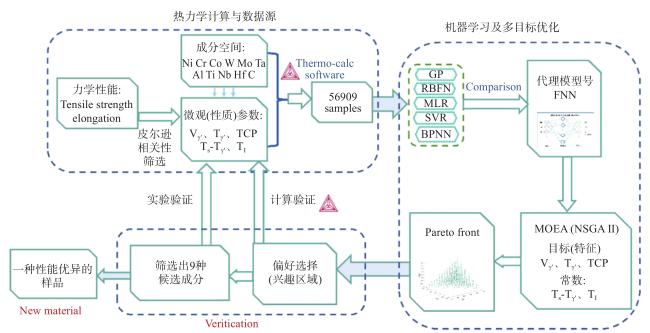
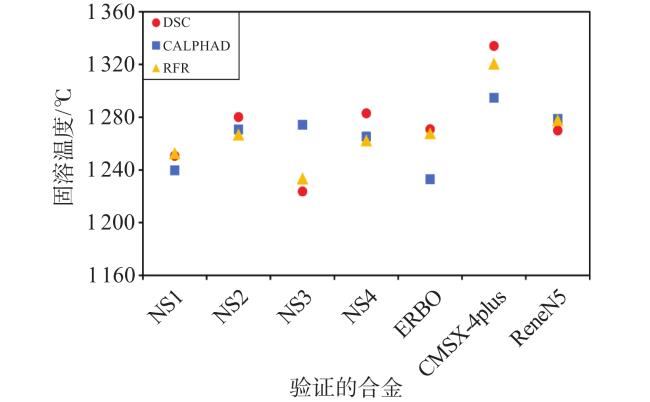
以热力学与相图信息为软约束,并对接可复用数据库资源,研究者将γ′相体积分数与固溶温度、晶格失配、元素分配系数与TCP相形成驱动力等中间量作为桥接变量,用以快速缩小候选成分与热处理区间。随后,将蠕变、寿命与氧化增重等关键验证点集中布置于最具潜力的区域[12]。晶体与多相组织层面的结构-性质关联在图表示与数据驱动分析中得到更加细化的刻画,这有助于识别位错剪切与绕过机制的转变点,以及γ′粗化速率对宏观性能的影响幅度[76]。Chen等[89]和HORST等[90]利用机器学习模型和CALPHAD方法对7种Ni基高温合金的γ′相熔解温度进行预测,其预测结果如图8 所示。可以看出,机器学习预测γ′相溶解温度方面比CALPHAD方法具有更高的精度。为满足强度、寿命、耐氧化性与密度等多目标并行的工程约束,研究采用权衡策略确定非支配折中组合,并通过小样本闭环试验对模型进行逐步校正,在满足强度、寿命与耐氧化性要求的同时,降低对稀贵元素的依赖[74]。以材料科学规律为主导的人工智能材料设计路径在传统浇注、锻造成形与增材制造等多种工艺路线间表现出良好的可迁移性与可复现性,能够成功设计出在1 000~1 100 °C下长期服役的γ-γ′共格强化型Ni基高温合金,具备更高的强度-抗氧化/抗腐蚀综合稳定性。
2.3 Co基高温合金的加速智能筛选
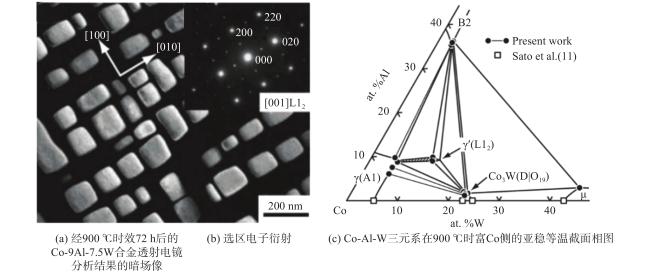
在更高服役温度目标的驱动下,Co-Al-W体系中具有L12有序结构的γ′析出相L12-Co3(Al,W)的发现,为构建γ-γ′共格强化具备更高熔点的Co基高温合金奠定了基础[81](图9 )。随后的研究围绕γ′相稳定性、晶格失配与元素偏聚开展精细调控,研究者通过适度引入Ni、Ti、Ta等元素,可提高γ′相稳定温域并提高固溶温度,配合对γ-γ′晶格失配与反相界面能的约束,改善位错-析出体相互作用与筏化稳定性,从而在高温应力下实现更低的最小蠕变速率与更持久的强度保持[80]。同时,针对Laves相、μ相、σ相等脆性TCP相的形成倾向,需要在保证γ′相体积分数与稳定性的前提下,严格控制Mo等元素的有效活度,并通过Co-Ni基高温合金设计思路在密度、熔点与组织稳定之间取得平衡。与γ-γ′共格强化型Ni基合金相比,Co更高的熔点提高了其强化相固溶温度。此外,Co元素与其他过渡元素协同作用,还能有效提高合金氧化膜可控性,为γ-γ′共格强化型Co基高温合金进一步提升服役温度和可靠性提供了潜在空间。Provatas等[79]将γ′相体积分数与溶解温度、晶格失配与元素分布、TCP相形成驱动力与相界距离等中间量与成分/热处理建立定量对应关系,借助CALPHAD热力学量与相稳定区作为软约束,优先收敛具有潜在优异性能的候选配方与工艺。然而,候选元素与成分组合的巨大空间使得在“高温强度-蠕变性能-γ′相稳定性-抗氧化性-密度”多目标约束下的候选成分搜索极为耗时费力,这导致了传统“试错式”试验研究方法设计的γ-γ′共格强化型Co基高温合金效率低、成本高[74]。
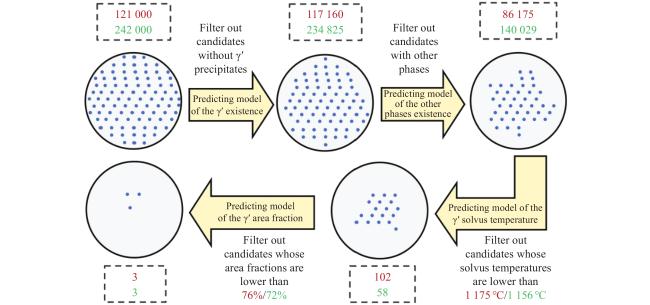
近年来,研究者借助数据驱动方法设计γ-γ′共格强化型Co基高温合金,用以提高合金的设计效率并降低开发成本。Liu等[91]利用Co基高温合金中杨氏模量差、价电子数等描述符训练机器学习模型进行训练,成功预测了该类合金L12相在高温下的沉淀粗化行为,为设计具有较强抑制L12相粗化能力的Co基高温合金提供理论指导。Yu等[92]基于机器学习模型对四个重要参数进行了预测,即γ'相及杂相的存在性、γ'相的固溶温度以及γ'相的体积分数(见图10 )。从363 000种可能的成分空间中筛选出了六组候选成分,成功开发出具有高固溶温度和相分数的新型Co基高温合金。这些研究以材料性能与组织演化数据训练机器学习模型,配合热力学计算与有限的针对性实验,实现了γ-γ′共格强化型Co基高温合金在更高服役温度方向上的持续、可量化推进。
2.4 耐热/高温铝合金的L12相析出调控与轻量化性能协同设计
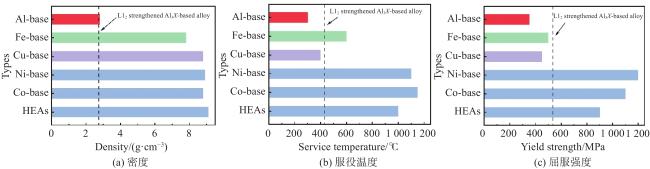
耐热铝合金作为航空航天、汽车制造和能源等领域的关键结构材料,其研发和应用不仅满足了多领域高效能材料的需求,还直接关系到我国先进工业的技术水平和国际竞争力。同时,耐热铝合金的可回收性也符合绿色制造的发展趋势。耐热铝合金与目前常用的耐热合金材料之间的综合性能对比如图11 所示。可以看出,耐热铝合金的服役温度一般在150~200 °C范围内,能够提供与钢铁材料相似的强度,而密度仅约为钢铁材料的三分之一,同时兼具优异的耐腐蚀性能及热导率,这使其在减重和提升推进剂效率方面表现出色。
2018年,Ekaputra等[107]开发了以L12相为强化相的Al3M系列稀土高温铝合金(M为不同种类的掺杂元素),如图12 所示。其中,稀土元素能够稳定L12相并提高合金的抗蠕变性能;过渡金属可以提高合金的抗拉强度并抑制析出相粗化,二者协同作用能够显著改善合金的微观组织。Al3M系列稀土高温铝合金的强化机制与Ni基高温合金γ′相共格强化相似,并能够在350 ℃下稳定服役,在汽车领域实现了钢铁和钛合金的部分替代,实现了汽车的整体轻量化[108]。2022年,该团队研究了使用微量Sc、Zr和Er改性的压铸亚共晶Al-Ce-Sc-Zr-(Er)合金的微观结构及力学性能:具有富Sc芯和富Zr壳结构的L12相Al3(Sc,Zr)能够提高合金的抗蠕变性能,该强化相与Al11Ce3强化相共同提高合金的强度。
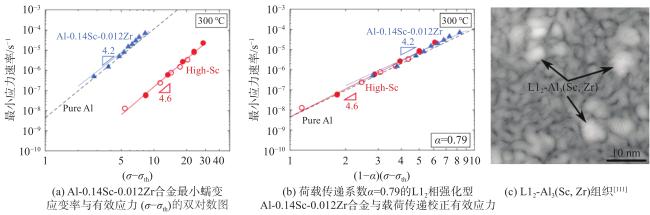
截至目前的研究结果表明,L12相强化型高温铝合金的综合力学性能仍有较大的提升空间[109,110],这主要受到以下几个因素的制约:(1)L12相与Al基体之间存在一定的晶格错配和较高的界面能,在高温环境下容易发生滑移或脱黏,同时也为裂纹的产生和扩展创造了条件,从而限制了合金高温力学性能和组织稳定性[111-113]。(2)L12相在中温(250~350 °C)下会失稳并粗化,强化效果减弱,进而降低合金的综合力学性能[114]。(3)Ti、Zr等过渡金属元素在高温下容易氧化,导致形成不稳定的氧化膜,降低合金在高温环境下的耐腐蚀性能[115]。有效解决上述三个关键科学问题是突破L12相强化型高温铝合金技术瓶颈的关键所在。
围绕L12相强化型高温铝合金,研究者在“成分-热处理-组织-性能”耦合关系的定量表征与快速筛选方面取得实质性进展。以Al-Sc/Zr体系为例,首先将L12-Al3(Sc,Zr)相的体积分数、析出-粗化动力学与溶解温度等中间量作为可验证目标,并与热力学相图及驱动力的计算结果相结合,建立元素配比、γ′有序相稳定域与晶格失配之间的映射关系,从而为高温强度、最小蠕变速率与导热率的协同设定可操作的靶区与约束窗口[116]。在此基础上,针对双/多级时效及增材制造后的热处理过程,运用相对重要性分析方法,对关键时-温参数实施优先级排序,并在小样本闭环中加速收敛至目标组织,从而实现蠕变最小速率与高温屈服的同步提升。同时,借助多保真融合吸收相场与扩散模拟输出,对L12相的形核-长大-粗化过程开展数据同化,显著缩减了“全因子”热处理试验的探索维度;在导热-强度权衡方面,通过对固溶元素与弥散相含量的联合约束,在保持L12相稳定与体积分数的前提下,实现热导与高温强度的并行改良[76,117]。
2.5 高温/难熔高熵合金的多目标优化
航空航天用先进动力装置的要求日益严苛,特别是对材料的服役温度及寿命的要求不断提高。传统的单一主元高温合金,虽在提高γ′相体积分数与固溶温度、优化γ-γ′晶格失配等方面取得了显著进展,但在进一步提升γ′相固溶温度、密度-成本-耐氧化等多目标时,已逐渐力不从心,难以在更高温区维持比强度与抗氧化的同步提升[117,118]。在此背景下,研究者将γ(FCC)/γ′(L12)共格双相的成熟范式进行拓展,提出了多主元/高熵高温合金(High-Entropy Superalloys,HESAs)的设计思路:以构型熵阈值ΔSconfig≥1.5R(R=8.31 J·mol−1·K−1)为判据(“等原子比”并非必要条件),利用熵驱动的固溶体稳定化、严重晶格畸变与缓慢扩散效应,在更高温区间获得组织与性能的综合提升[119-121]。由于等原子比的合金几乎不可能获得γ-γ'两相共格结构,为了获得具有γ-γ'两相共格结构的高熵高温合金,需要调控γ相(FCC结构)或γ'相(L12结构)及对应的亚点阵(A,B,···,C)3(M,N,···,P)1中的构型熵,并通过掺杂元素来调控γ'相的组织稳定性。这一方法将高温合金的组织特征与高熵合金的设计理念进行有机结合,为获得性能良好的高熵高温合金成为可能。多主元带来的成分空间急剧增加和多相竞争,使得“成分-占位-键合-对称性-组织-性能”的设计维度显著扩展,传统的“试错”式实验方法与逐一进行第一性原理遍历在时间和成本上均难以承受。为此,近年来的研究发展出了“计算-数据-实验”协同的机器学习驱动方法。通过物理描述符结合多种机器学习算法,可以快速判别生成相性质[122-124];引入图机器学习在晶体图上分析局域配位与对称性,能够预测强化相稳定性、弹性常数等,有效减少了对手工特征的依赖[125]。此外,将CALPHAD相边界、相分数、固溶温度等作为约束嵌入机器学习算法中,能够构建“工艺-组织-性能”的数据链条[126,127]。Xi等[128]提出了一种将第一性原理计算与无监督/监督机器学习相结合的高熵高温合金设计方法,同时借助热力学计算,成功设计出了在700 °C下压缩屈服强度为633 MPa的Co-Ni-Cr-Al-Cu-Ti体系高熵高温合金。该合金的L12相固溶温度达到了1 030 °C,熔点为1 220 °C(见图13 )。该工作为具有γ-γ′双相微管结构的高熵高温合金的加速设计提供了有益的参考。
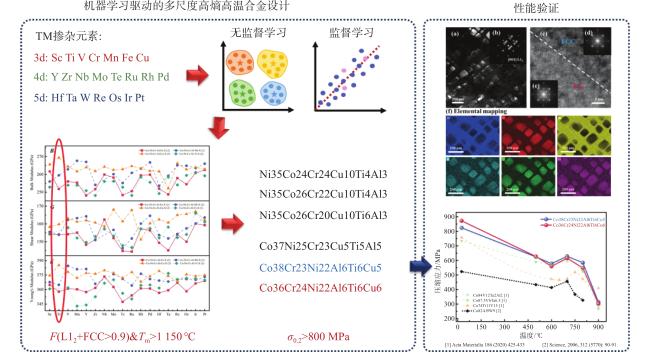
针对HESAs典型的小样本与跨体系性能预测的挑战,三条互补路径尤为关键。在大规模低保真计算与材料文本语料上开展模型的训练,学习与键合、对称性、相竞争相关的通用表征,再以少量高保真标签微调,可显著降低过拟合现象,提升模型的外推能力[129-131]。在对称性与热力学边界约束下的扩散模型,可直接合成物理可行的成分/结构候选方案,为预训练提供数据增广,为主动学习提供高价值探索提案,并与图模型判别器形成“生成—判别—验证”的闭环。最新的MatterGen显示出在无机结构空间的可控生成潜力,为HESAs相关相/界面化合物与涂层结构的先验构建提供了新手段[54]。该方法在有限高可信度数据条件下,实现了“成分—工艺—组织—性能—寿命”的约束式联合优化,为多主元高温/难熔高熵的工程化筛选与采纳提供了可验证的技术支持。
2.6 航空航天贵金属焊接材料智能设计
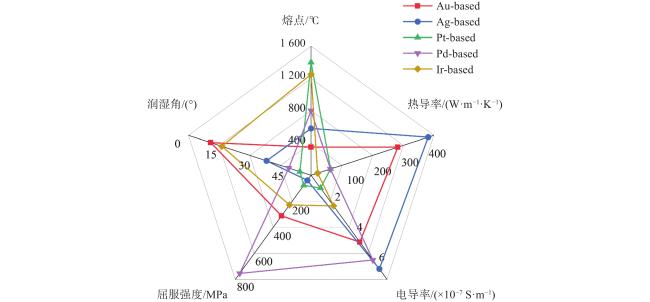
贵金属焊接材料(如金(Au)、银(Ag)、铂(Pt)、钯(Pd)和铱(Ir)基材料)因兼具卓越的电导率与热导率、优异的耐腐蚀性以及在高温环境下的结构与性能稳定性,因而广泛应用于电子封装、半导体制造和航空航天等高端领域,成为保障器件可靠性、延长使用寿命的关键材料[131-133]。常用的贵金属焊接材料的综合性能对比如图14 所示[134-138],包括热导率、电导率、屈服强度、润湿角和熔点等关键参数,体现了不同贵金属材料在特定应用场景中的优势与权衡。从图14 可以看出,Au基贵金属焊接材料的润湿性最好,其热导率和电导率仅次于Ag基焊接材料;尽管Ag基贵金属焊接材料拥有卓越的热导率和电导率,但Ag基合金的润湿性及强度存在明显的不足;Pt基贵金属焊接材料熔点过高,且其余物理性能表现也欠佳;与Pt基贵金属焊接材料相比,Ir基贵金属焊接材料具有优异的润湿性能。这些贵金属焊接材料适用的焊接工艺、性能参数及主要应用领域对比如图14 所示。然而,由于贵金属资源稀缺,材料成本高昂,且在极端环境(如高温、辐照、腐蚀等)下易发生性能退化,在实际应用中主要面临焊接材料与基材热膨胀系数失配引发界面裂纹、高温蠕变抗性不足、综合力学及热电/输运性能欠佳等问题。
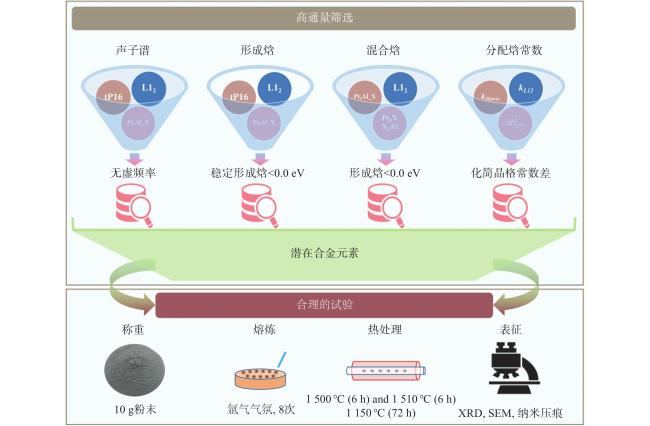
在航空航天贵金属焊料体系中,围绕L12结构的Pt3Al强化相合金化与组织稳定性,是实现高温强度与抗氧化协同提升的关键。Yu等[150]基于对L12-Pt3Al在局域原子环境畸变作用下晶格稳定性的定量表征,提出了“晶格稳定-亚点阵占位-相稳定-组织-性能”的可追溯链条(见图15 )。一方面,通过高通量第一性原理与可解释的稳定性描述符,判识L12相的保持条件,避免低温四方畸变破坏γ/γ′共格界面;另一方面,将该判据嵌入数据驱动筛选与验证路径中,成功发现并实验确认了一批具备高温稳定性的Pt-Al γ/γ′候选超合金,为贵金属高温合金的智能设计提供了可解释的筛选标准与可复用流程。该方法还能与CALPHAD的相界/驱动力、图表示学习对晶体拓扑与配位的编码以及不确定性量化耦合使用,以γ′相体积分数、溶解温度、界面能、扩散动力学等“中间量”作为桥接变量,构建从成分-组织到接头服役响应的跨尺度映射,并在小样本条件下通过贝叶斯更新实现外推校准与风险控制。


面向Au基钎料与异种连接的可焊性与可靠性优化,智能设计的核心在于以小样本、多因素、跨域数据对润湿角/铺展性-固/液相线-接头强度-热循环寿命进行联合建模与序贯优化。在实践中,可采用领域知识引导的特征体系+集成学习构建稳健代理模型,并辅以域自适应与可校准不确定性,以提升跨基材、跨工艺外推的可信度。在试验规划与候选生成方面,应用多目标贝叶斯优化与主动学习,以信息增益/风险约束为准则精选实验点,显著降低验证成本并加快逼近性能前沿[151]。已有工作在无铅钎料中验证了该闭环策略对强度-延性-热循环寿命的协同提升作用[152];针对润湿角预测的代理建模也显示,结合成分、基材与回流温度等变量的机器学习模型能够在少量标注下取得稳定泛化,并提供对合金化/表面工程(如微量活性元素、涂层厚度)的定量敏感性分析,为Au基贵金属钎料的配方-工艺联动优化提供了可操作路径[153]。在更广义的贵金属焊接材料场景中,可将成本与供应链约束纳入优化目标,通过CALPHAD与贝叶斯优化的多目标框架在热膨胀系数匹配、脆性TCP/脆性化合物抑制与抗氧化之间寻求非支配折中解集,并与工艺窗口反演结合,形成“生成-筛选-验证-更新”的可审计设计-验证闭环[154]。综合来看,贵金属焊接材料的智能设计正从“经验与规范驱动”向“物理先验-数据证据-不确定性管理”协同的工程级范式转变,能够在有限高可信度数据条件下提升外推可靠性并缩短开发周期。
2.7 工程服役合金与焊接材料的智能化设计与性能提升
针对航空航天领域已经大规模应用的高温合金与耐热结构材料,在工程实践中,长期积累了大量关于牌号成分、制备工艺、服役环境与失效行为的试验与运行数据。然而,这些信息通常分散于标准、试验报告和企业数据库中,目前仍缺乏系统化的整理与综合分析。近年来,数据驱动的建模与优化方法逐步引入此类工程服役体系。一方面,该方法在既定成分框架内用于定量刻画工艺-组织-性能之间的关系;另一方面,在不改变主体系的前提下,对安全服役裕度和寿命分布进行重新评估,从而实现对既有材料体系的再开发和性能提升。
在已经工程化应用的镍基高温合金方面,研究者基于日本物质・材料研究机构( National Institute for Materials Science, NIMS)等长期服役数据库,构建了以合金元素含量、热处理制度以及应力-温度条件为输入、蠕变断裂寿命为输出的代理模型,用于寿命预测与参数优化。Zhu等[155]利用特征筛选结合特征迁移策略,将不同温度和应力水平下的蠕变断裂数据进行融合,建立了基于特征筛选-支持向量回归的蠕变寿命预测模型,并将GH4169合金的历史数据迁移到数据相对稀缺的GH4169D合金体系,在高温蠕变寿命预测中获得了超过90%的预测精度。这实现了在不显著增加新试验工作量的情况下,对工程服役合金蠕变性能的快速评估与寿命外推,为涡轮盘、压气机盘等关键构件的寿命管理提供了有益参考。
对于广泛应用于机身、机翼和航天器结构的耐热铝合金(如2xxx、6xxx和7xxx系列),数据驱动模型主要被用于在给定基体体系内进行微合金化和热处理制度优化,以便在强度、延性、导电/导热性与焊接性能等多指标之间取得新的平衡。Li等[156]以7xxx系列铝合金为对象,将多组分成分、热处理工艺参数与力学性能引入贝叶斯优化框架,通过高斯过程代理模型和期望改进准则,引导有限批次实验向高强度区域收敛,实现了高强高韧铝合金的加速筛选。Chaudry等[157]则将成分、固溶-时效工艺参数与组织-性能数据集成,建立集成回归模型对拉伸强度、延伸率等关键指标进行预测,并据此反向搜索合金化路线和热处理窗口,为铸造和轧制铝合金体系的工艺优化提供了可操作的策略。
焊接与钎焊连接材料同样是航空发动机和航天结构中的关键环节,贵金属钎料和高可靠性焊接材料的服役安全性直接关系到冷却通道、蜂窝结构和传感器封装等部位的失效风险。针对电子封装用锡基焊料,Samavatian等[158]基于多种加速寿命试验数据,采用相关性驱动的统计建模方法,将合金成分、焊点几何与载荷工况,将其与热循环失效寿命相关联,通过随机森林和符号回归模型识别出主导可靠性的关键特征,并将这些特征用于缩减物理试验的数量、优化加速试验设计。在贵金属钎料方面,Fang等[159]以Cu-Ag-Zn-Mn-Ni-Si-B-P系钎焊材料为研究对象,结合响应面分析与回归模型,表征成分与钎焊工艺参数对应力强度和界面组织的综合影响,通过多目标优化获得兼顾接头强度和工艺可操作性的组合方案,为面向高温构件的Cu/不锈钢和Cu/高温合金接头设计提供了具有推广性的思路。
总体而言,围绕已经实现工程化应用的高温合金、耐热铝合金及贵金属焊接材料,数据驱动方法的主要作用在于在现有合金框架内充分利用历史试验与服役数据,构建可靠的寿命与性能预测模型,识别对性能敏感的合金元素与工艺参数,并在满足现行标准与认证约束的前提下,对寿命评估、工艺窗口收缩以及性能提升进行定量化分析。上述研究表明,在已在役材料体系上开展针对性的建模与优化工作,可与新材料体系的开发形成互补,为工程应用提供更具针对性的设计与评价路径。
2.8 小 结
围绕航空航天结构用关键结构合金材料,上述内容在“成分—工艺—组织—性能—服役”全链条上构建了以物理约束为核心的融合式研究框架:多模态、多尺度数据经标准化与跨域清洗后纳入数据库建模。同时,将能量守恒定律、晶体对称性与相图热力学等先验知识作为约束条件,结合图机器学习等新兴技术,将显微组织等图像数据一并整合进数据链条,形成“候选生成—约束筛选—针对性验证—迭代更新”的收敛路径,使候选材料成分空间被限定于物理可行域内,从而提高预测数据的可信度,实现了材料预测效率的大幅提升。
γ-γ′相共格强化的Ni基与Co基高温合金,通过“γ′相体积分数、溶解温度-γ-γ′相晶格失配-TCP相驱动力”等中间量,实现了与蠕变速率、持久寿命、抗氧化性及力学性能的有机结合;结合显微组织的语义分割与尺寸谱统计,为“工艺—组织—性能”因果链提供了辅助决策依据,晶体/界面层级的结构化表示则提升了相稳定性与弹性常数的预测精度。对于L12强化的耐热/高温铝合金,析出-粗化动力学与导热-强度权衡则被纳入同一优化框架,通过时-温参数的优先级排序与小样本闭环验证,实现了目标组织的快速逼近与性能的稳步优化。将γ-γ′相强化型航空航天结构材料沿“成分维数-相竞争强度”外推至多主元/高熵体系后,结合亚点阵占位与有序度调控、相图边界与结构增广,能够有效缓解组合空间爆炸式增长所造成的研发效率低、成分空间巨大等问题。同时,在贵金属焊接材料中,以润湿角与铺展性、固/液相线、界面强度与热循环寿命等为“中间量-性能”桥接变量,构建物理约束下的多目标贝叶斯优化与主动学习闭环,可在小样本与跨域条件下实现可焊性-可靠性-成本的协同提升。
3 面向小样本、多模态与跨尺度的航空航天合金材料智能设计展望
围绕航空航天关键结构合金,如Ni/Co基高温合金、耐热/高温铝合金及多主元/高熵高温合金,未来研究亟需在“数据—模型—物理—决策—验证”全链条数据上构建一个可外推、可验证、可迭代的统一框架,从而以最少的高保真样本数据,快速实现航空航天关键结构合金设计。目前,仍有以下方向值得深入挖掘:
(1)建设面向高温服役场景的航空航天关键材料的多尺度/多模态、高保真数据评价标准。围绕“成分—工艺—组织—性能—服役”链条,联通第一性原理计算、热力学计算及相场动力学计算、显微图像数据、蠕变曲线、热氧化曲线及力学性能曲线等异构数据,实现航空航天用材料的“微观-介观-宏观”一体式设计。
(2)深化物理-数据融合的建模范式并实现跨尺度一致性。将热力学平衡、晶体对称与能量守恒律作为约束边界条件,将其嵌入CNN/GNN/Transformer等深度架构,利用相分数、晶格失配、元素分配系数、界面能与扩散系数等“中间量”桥接变量,实现由材料微观到宏观的可追溯映射。同时,建立不同保真度数据之间的偏差与方差收敛规律,确保在小样本条件下仍具备稳健的外推能力与物理一致性。
(3)系统化发展“小样本友好”的预训练与生成式技术栈。面向成分序列、晶体图与显微组织图像,构建自监督预训练库。在跨体系、跨模态、跨尺度材料数据中,微调高可信度标签,显著降低过拟合风险。引入扩散/自回归等生成式模型在物理可行域内合成结构-成分候选与“弱标注”样本,用于数据增广与主动学习提案,并与判别模型、CALPHAD约束共同构成“生成—筛选—验证—更新”的闭环。
(4)强化跨体系迁移与可制备性-可持续性约束的协同。针对Ni/Co基、耐热/高温铝合金与高熵体系在相稳定域、扩散动力学与氧化膜形成机理上的共性与差异,建立可迁移的表征与约束模板,实现跨体系的先验复用与少样本落地;同时,将成本、临界元素依赖、可回收性作为并行目标或硬约束纳入优化过程,形成面向工程的“可实现”解集。
通过上述研究思路,可以将“小样本、跨域与多模态”的现实约束转化为模型设计与数据组织的先验优势:以可复用的数据底座为引领,优先构建覆盖成分—工艺—组织—性能—服役链条的多保真数据谱系,并通过元数据与不确定性标注保证来源可追溯与评估可比较;在建模层面,将热力学平衡、对称性与守恒关系以可微约束或结构正则嵌入表征学习框架,结合跨模态自监督预训练与迁移微调,形成对键合、相竞争与扩散行为敏感的通用表示,从而在极少高可信度标签下,仍保持稳健的外推能力;在决策层面,引入面向成本的多目标贝叶斯优化与主动学习方法,以信息增益驱动样本采集与工艺探索工作,着重降低关键机理与边界条件的不确定性;在验证层面,构建覆盖率、校准误差等可审计指标,将数字孪生与在线监测纳入“在环”校准过程,实现从实验尺度到制造与服役尺度的持续同化与迭代。随着开放基准、数据治理与报告规范的制度化推进,上述各项要素将共同构成一套可迁移、可复现、可认证的智能设计体系,确保方法学优势在工程端得到稳定转化,进而持续支撑航空航天关键材料在更高温度、更长寿命与更严苛环境中的迭代与应用。
4 结 语
未来研究应推动机器学习在高温合金设计领域从“性能拟合器”转变为“可提出并验证物理命题的科学发现工具”。一方面,需要构建物理一致且可解释的表征,嵌入对称性、守恒律与相平衡先验,并实现表征的可逆映射以便实验验证;另一方面,要发展多尺度可学习算子,用以捕捉微观演化到宏观性能的耦合机制,同时在模型设计中纳入严格的不确定性量化与外推判据,以满足工程可信性要求。逆向生成与优化应在热力学和可制备性约束下,输出可证伪的机理假设。自监督预训练、因果化实验设计以及多模态、多保真数据融合,将是应对数据稀缺与异构性的关键方法。最后,建立覆盖外推稳健性、物理一致性与假说可证伪性的评测基准,开展开放可复现实践,是实现从方法学创新到可持续科学累积的制度保障。