
0 引 言
地外生存是人类实现长期太空飞行、地外长期居住和地外移民的必备能力。然而,地外生存过程面临大量基本物资需求问题。从地球携带资源开展载人深空探索的任务,不仅成本高昂,而且技术上难以实现。对于无人深空探测任务而言,飞行器的燃料供给也是制约任务实施的关键因素。因此,亟须有效原位利用空间飞行器的废弃物资源和地外天体资源,减少从地球的携带需求,最终实现“摆脱地球资源供给”的目标。
当前,人工光合作用主要有光催化、光电催化、光热催化和光伏-电催化等技术路径。光催化技术利用半导体材料吸收光能,产生电子和空穴,其中电子将二氧化碳还原为燃料,而空穴将水氧化生成氧气。然而,目前该方法太阳能利用率和单位面积反应速率低。光电催化是在光催化基础上外加偏压,促使光生载流子定向迁移,以此提高太阳能利用率。但该方法对材料设计和制备要求较高,且产物种类单一,目前仍处于实验室研究阶段。相比之下,光伏-电催化技术通过成熟的光伏技术提供电能,并利用电催化将二氧化碳转化为氧气和多种含碳产物,其太阳能利用率和转化速率较高,应用潜力大。由中国空间技术研究院钱学森空间技术实验室和南京大学等单位组成的研究团队在地外人工光合作用技术的基础研究和关键技术攻关方面取得进展[4-6],实现了高效二氧化碳转换制备乙烯、甲烷和甲酸等多种产物[7-9],并完成了空间试验原理样机[10]和规模化原理样机的研制[11],有效提高了技术成熟度。
近年来,为有效利用地外密闭空间和火星大气中的二氧化碳,各国研究者在热化学二氧化碳转换技术的基础上,积极探索多种提高二氧化碳中氧元素利用率的新路径[11]。国际空间站采用电解水方式为航天员补充氧气,并通过Sabatier热化学反应,使用电解水产生的氢气将二氧化碳还原为甲烷和水。该系统于2010年完成空间站测试,其氧元素回收效率(二氧化碳中的氧元素以水的形式回收)约为40%。2018年,欧空局联合空中客车公司开发了ACLS载荷,并成功安装到国际空间站。该载荷采用与美国国家航空航天局(NASA)相同的技术原理,提高了二氧化碳的吸附和转化效率,氧元素回收率达48%,每名航天员每年可节约150 kg水资源。中国空间站环控生保系统的二氧化碳还原系统,其测试的氧元素回收率达到49%[12]。针对火星大气二氧化碳原位资源的利用,NASA研制的“毅力”漫游车搭载的试验载荷MOXIE采用高温电解技术获取氧气和一氧化碳,反应温度为850℃,试验结果显示,该装置利用火星大气中的二氧化碳进行转换,可实现约6 g/h的产氧量[13]。
目前,空间站采用Sabatier反应进行二氧化碳转换,其反应方程式为:
氢气全部通过电解水获得,反应产生的甲烷直接排出舱外。由于甲烷中的氢元素无法回收,因此还原1 mol二氧化碳需消耗4 mol氢气(相应消耗4 mol水),但只能回收2 mol水,理论氧元素回收率为50%。为了提高二氧化碳转换的氧元素回收率,NASA资助开发了等离子热解(Plasma-Processed Air,PPA)装置。该装置通过高温热解将甲烷转化为乙炔和氢气,反应方程式为:
反应产生的乙炔将排出舱外,氢气经分离装置回收后可继续用于二氧化碳还原。将PPA装置与Sabatier反应装置和电解水装置组成一个循环系统,理论上氧元素回收率可超过80%。然而,PPA装置能耗大(>800 W),且甲烷分解反应过程复杂,会产生多种有毒、有害副产物气体,这增加了后续氢气分离和回收难度[11]。为了进一步回收甲烷中的氢元素,NASA和日本宇宙航空研究开发机构(JAXA)开展了甲烷裂解脱氢技术研究,其反应方程式为:
霍尼韦尔宇航公司和JAXA分别研制了原理样机,但该反应存在温度高、转化效率低和产物难以分离等问题。同时,NASA也在开展热催化Bosch反应器的研究,其基本原理是在高温条件下,二氧化碳与氢气经催化反应,生成水和固态碳,反应方程式为:
在二氧化碳转换产物的应用方面,NASA于2018年开展“二氧化碳转化挑战赛”,将多碳产物作为二氧化碳转换目标,并资助多个相关研究项目[11]。其中,Air Company和Hago Energetics,Inc.公司采用热催化技术,将二氧化碳与氢气反应转化为甲醇,再通过甲醇脱氢醛化制备多碳糖类化合物;Team SSwEET团队结合光电催化技术与微生物,将二氧化碳转化为乙酸盐,再以此为原料制备六碳糖类(C6)和其他有机物;RenewCO2LLC公司利用过渡金属磷化物作为电催化剂将二氧化碳还原为三碳(C3)和四碳(C4)产物。
与目前空间应用的热催化和高温电催化相比,地外人工光合作用技术通过高效光电催化过程,将地外二氧化碳资源转化为氧气和多种含碳燃料,具有反应条件温和、反应过程可控和产物选择灵活等特点。通过优化二氧化碳转换反应路径和产物,能有效提高氧元素的回收率;另外,通过改变催化剂可将二氧化碳转化为甲酸、乙醇等含碳化合物,为后续在地外空间人工合成糖、淀粉等碳水化合物提供物质基础。通过研制空间技术试验装置,构建“天地一体化”试验系统,分阶段、分步骤开展空间试验验证,以实现空间环境下高效二氧化碳转化利用和氧气制备,并揭示空间环境对地外人工光合作用关键指标的影响机理和作用机制,有望形成国际领先、我国独有的核心技术,为应用系统设计和工程研制提供理论和实践依据[15]。
1 地外人工光合作用空间站技术试验装置设计
地外人工光合作用涉及微重力环境下复杂的多相物理化学过程。由于缺乏相关微重力实验数据,限制了对该过程的认识和研究,并阻碍了相关技术的发展和空间应用。另一方面,开展空间试验将有效验证二氧化碳常温转化、氧气分离和收集、产物在线检测等新技术和新方法,并系统性研究多相反应过程、稳定性和控制策略等因素。在此基础上,实现相关材料、器件和系统设计关键参数的优化,推动地外人工光合作用技术的快速发展。基于以上需求,开展试验装置的设计工作。
在轨试验装置将在空间站试验机柜内开展地外人工光合作用试验,将二氧化碳气体转化为氧气和乙烯等含碳化合物。人工光合反应器作为试验装置的核心功能模块,为实现在轨功能验证并达到性能指标,需要为其提供物质供给(CO2气体和电解液),并对产物进行在线检测。根据在轨技术试验的总体要求确定试验载荷基本功能,包括:
(1)高效的二氧化碳还原和产氧功能;
(2)气、液产物分离和储存功能;
(3)二氧化碳气体和电解质溶液的连续供给和气、液流量高精度控制与调节功能;
(4)反应产物的高精度在线检测和分析功能;
(5)反应过程的可视化观察功能;
(6)试验数据记录、存储和上传功能;
(7)与试验机柜电接口连接并为试验装置供电;
(8)与试验机柜信息接口连接实现通信功能。
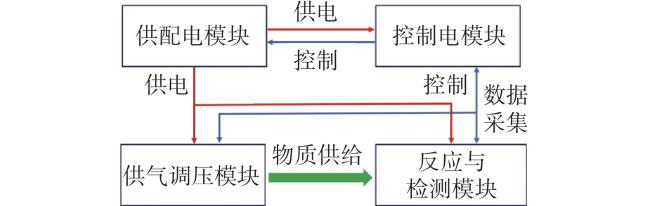
基于试验装置基本功能、工作原理和接口要求,开展方案设计。按照功能将试验装置分解为反应与检测模块、供气调压模块、供配电模块和控制器模块共4个模块。各模块基本功能如下:
(1)反应与检测模块。负责开展地外人工光合作用技术试验,实现产物分离、检测和收集,并具备反应过程记录、反应产物在线检测和分析等功能。航天员可根据在轨试验规划对模块进行在轨更换和采样返回。
(2)供气调压模块。为反应器提供二氧化碳气体和电解液等反应物质供给,在轨试验过程中对气体和电解液进行流量调控与监测。
(3)供配电模块。与试验机柜电接口连接,将输入的直流电变压后为装置中的所有单机供电。
(4)控制器模块。通过信息接口与试验机柜连接,实现试验机柜对试验装置的遥控、遥测和数据转移,对各个单机进行时序控制,并对在轨试验数据进行采集、存储和转移。
试验装置组成框图如图1 所示。
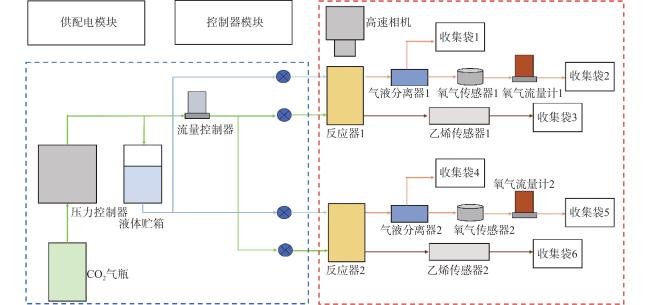
试验装置在轨工作原理如图2 所示。通过控制器模块确认试验装置状态并开启工作模式。供气调压模块中的储气瓶储存二氧化碳,作为驱动气源和反应气体,压力控制器对气体进行减压控制,同时压力传感器实时监控出口压力。减压后的二氧化碳气体被分成两条支路:一路作为二氧化碳反应气体直接进入气体质量流量控制器调节流量,然后进入反应与检测模块中的地外人工光合反应器;另一路作为驱动气体进入电解液贮箱,利用压力变化调节电解液流量,调节后的电解液进入地外人工光合反应器。在反应器中,二氧化碳气体和电解液发生化学反应,反应产物全部进入收集袋。其中,反应器一端的出口为气、液混合物,通过气液分离器实现气体和液体的分离。液体进入液体收集袋;气体则经过气体传感器、气体流量计检测后进入气体收集袋。高速相机记录反应器微通道内的气液分布和运动过程。反应与检测模块包含2个反应器,在反应器1完成全部在轨试验后,可通过控制器切换到反应器2进行试验。
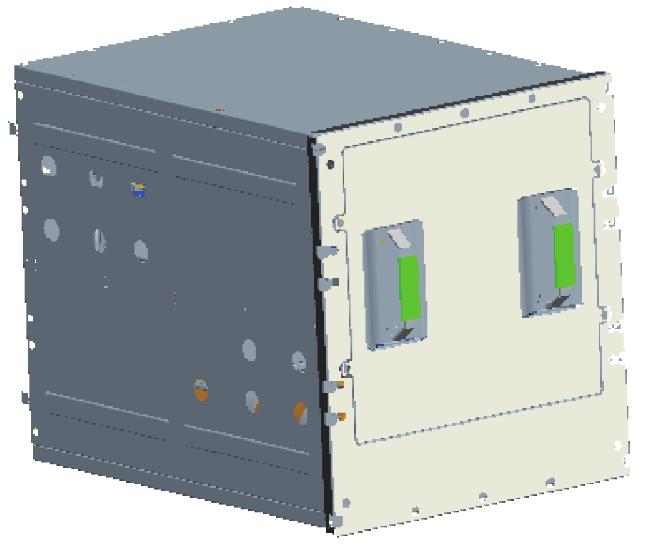
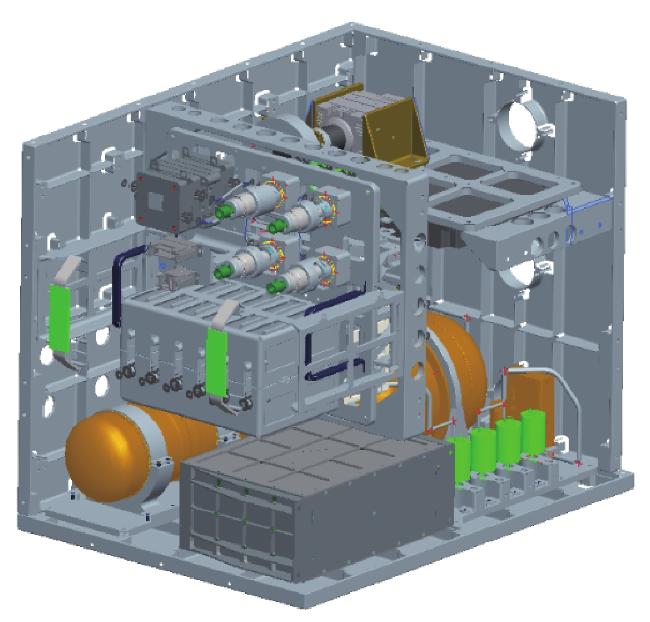
试验装置内部、外部结构布局设计分别如图3 、图4 所示。其外结构依据试验机柜的标准接口要求设计,并基于在轨试验工作特点,对试验装置内部结构进行了布局和人机工效学优化。由于试验装置内部包含大量模块、单机、电缆,在有限的空间内进行系统布局时,既需要满足力学环境的要求,还需要兼顾航天员在轨更换操作时的操作力、操作空间、便捷性以及防误操作等工效学要求。
2 在轨试验任务
2.1 在轨试验目标
利用试验装置开展在轨试验,以验证微重力下二氧化碳转换和氧气再生反应的效果,并完成试验数据记录和样品收集。通过分阶段、分批次开展在轨试验,验证不同反应器的工作性能。同时,通过比较分析地面试验和空间试验结果,总结空间环境对地外人工光合作用技术的影响因素及其规律。主要研究内容有以下4点:
(1)地外生存人工光合作用技术试验体系。建立二氧化碳转换制备多种含碳化合物和氧气再生的物理化学反应、催化材料与器件的地面和在轨验证方法,制定地面和在轨试验的标准流程。通过天地数据对比,建立空间环境下人工光合作用综合评价体系。
(2)高效二氧化碳转化与氧气再生。研究微重力下二氧化碳转化和氧气再生反应的能量与物质转化规律,揭示微重力环境对反应表/界面的影响。开发高氧利用率的二氧化碳转化方法,探索二氧化碳制备多类碳氢化合物的方法。
(3)微重力环境下高精度流体管理。研究适用于空间环境的微型化气、液供给技术和高精度微流量控制方法,揭示系统参数对二氧化碳转化和氧气再生反应的影响机制。
(4)研制地外生存人工光合作用试验装置。包括微通道反应器、微流量控制等功能模块,并研究高效气液分离、产物收集和反应的高精度在线检测和分析方法。
2.2 在轨试验规划
在轨试验的主要任务包括以下4项:
(1)针对不同催化材料体系和反应器,开展二氧化碳催化转换与氧气再生过程的在轨验证和性能评估。
(2)开展多相催化反应界面、气液扩散传递等关键物理化学过程的在线观测与结果分析。
(3)实现对反应器连续可控的供液和供气,分离和收集反应产物,实时测量关键点的压力和流量等信号。
(4)通过航天员在轨操作更换反应器模块,开展多个阶段、多次试验和拓展性试验,推动关键技术的迭代发展。
3 初步试验情况
3.1 地面试验情况
在完成试验装置的研制和电测工作后,针对试验装置开展地面测试试验,试验结果如图5 所示。在地面试验中,通过地面模拟上位机向试验装置发送指令,试验装置内部的人工光合作用反应器进行二氧化碳转化和氧气再生,同时对产物进行在线检测与收集,最后将获取的试验数据发送至上位机。
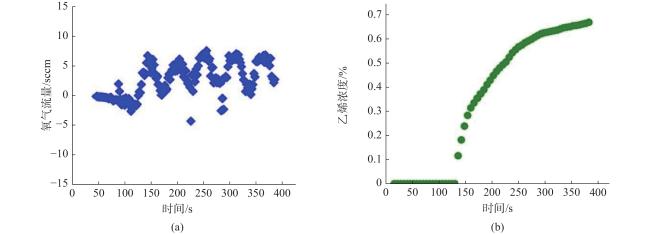


试验装置测试了多种反应器和催化剂材料的二氧化碳转换和产氧性能,其中析氧反应产生气体的流量为2~10 sccm,二氧化碳还原产生乙烯的浓度为0.1%~3%。反应器结构和催化剂材料种类等因素直接影响二氧化碳转化和产氧性能。典型试验结果如图5 所示,其中图5 (a)为试验过程中氧气的实时流量,图5 (b)为二氧化碳还原获得乙烯的实时浓度。地面试验结果表明,试验装置能够进行人工光合作用反应,并能够对试验过程中生成的氧气、乙烯等产物进行定性与定量分析,达到了试验装置的设计目标。
3.2 在轨试验进展
地外人工光合作用技术试验装置已完成第一、二阶段共12次在轨试验,这是国际上首次基于地外人工光合作用技术的二氧化碳转换和氧气再生,并成功获得了氧气和二氧化碳还原产物乙烯[16]。在轨试验成功验证了多项关键技术,包括常温二氧化碳催化转化,微重力下固、液、气多相反应界面上气体的运输与分离,空间高精度气体和液体流量控制,以及氧气和二氧化碳还原产物高灵敏度在线检测等,为发展地外原位资源利用新技术奠定了重要基础。前期研究表明,微重力环境对多相物理化学反应性能有直接影响[17],而项目团队研制的微通道结构反应器有效克服了微重力对多相反应的不利影响。同时,在轨试验获得的大量微重力下多相物理化学反应数据,将有力支持对微重力条件下反应过程特点的探究及对反应机理的深入认识,并为后续试验的开展和技术的空间应用积累重要数据。
4 结 语
本文介绍了地外二氧化碳转换技术的现状与发展趋势,着重阐述了地外人工光合作用这一新技术领域。地外人工光合作用能够在常温下实现二氧化碳还原和产氧;还能够通过多种能量转换方式有效提高能量的利用效率;改变反应催化剂可定制化获得不同二氧化碳还原产物,例如作为推进剂的甲烷或乙烯,以及作为合成糖类重要原料的甲酸等。这些特性对未来地外长期生存和原位资源利用意义重大。
针对空间科学与技术试验,本文提出了地外人工光合作用技术的试验目标,并完成了空间技术试验装置的设计与地面测试。目前,地外人工光合作用技术试验装置已经成功开展了12次在轨试验,实现了高效二氧化碳转换和氧气再生新技术的国际首次在轨验证。这不仅为地外原位资源利用新技术的研发奠定了实践基础,也为后续试验设计和实际应用提供了重要参考。